
One artwork in the form of another – ‘ekphrasis’

A Christmas present: It’s a collection of elegant, artful essays, A Dream of Stone, by Marguerite Yourcenar (2025). She was a mid-twentieth century Belgian-born novelist (1903-1987) whose name I cannot recall ever having heard before opening the package. Each chapter, an artistic piece of writing on its own, discusses some other work. The first, for example, concerns “The dark brain of Piranesi,” building on a nineteenth century poem by Victor Hugo about the architecture and etchings of Giovanni Battista Piranesi a century earlier: one “song” to the “tune” of another, itself built on a third. Another essay concerns the Sistine Chapel, Michelangelo’s great creation, a third about how time transforms sculpture, a fourth on a dream that the German Renaissance artist Albrecht Dürer recorded in his journal.[1]

The book got me thinking about another form of writing, one that takes the words off the page – or off the wall – for the benefit of those who cannot read because they cannot see. Imagine yourself without sight. Now listen to the poem “Ode on a Grecian Urn,” by John Keats. What picture do you see? How does the voice sound? Is it male, female; old, young; with a London accent or a foreign one? Is it foreign to Keats’s accent, assuming we can hope to know how a London accent sounded a century before technology recorded sound?

Art museums in many cities have attempted something like this – precisely for the benefit of visitors with impaired sight. Audio descriptions – a form of ekphrasis – make that possible. In 2024, a dear friend organised a project, called Ensemble, to give sighted people like me a chance to hear various paintings and sculptures at a gallery in south London. Each work of art came with two audio descriptions. One was by the artist, the other by a professional audio describer, that is, a professional writer. Visitors to the gallery could listen in turn to the two descriptions and form a mental picture of the work. But they could not see the work of art, only imagine it. The gallery walls were bare.

More from:
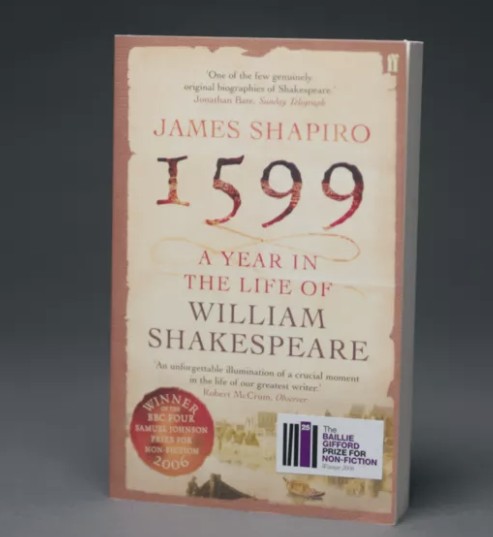
‘1599’ and all that – the particular and the universal

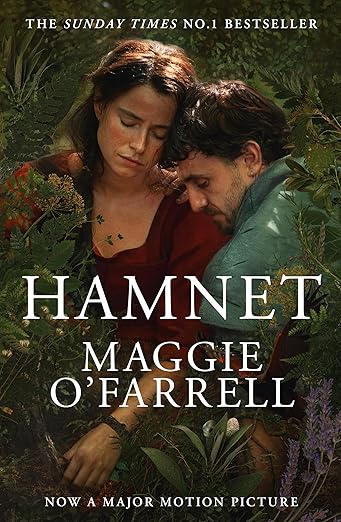
The critical success of the film and of Maggie O’Farrell’s novel, Hamnet, was the spur.

Several years ago, I bought James Shapiro’s 2006 Ballie Gifford award-winning book 1599: A Year in the Life of William Shakespeare, planning to make time to read it, someday, maybe.

Now, I have read and written about the novel Hamnet and found there an imagined version of the domestic half of the Shakespeare family’s story. It was a tale in which William is largely absent and the telling of it didn’t even mention his name. Time to read about the other half.

Shapiro (2005) tells a good story, bursting with facts that even many Shakespeare scholars may never have heard. It reads like good history. Its analysis of Shakespeare’s writing illuminates the craft. It’s a good read, but beyond that, it has a mission.

More from:

‘Hamnet’ and … Shh … don’t mention it!

Hamnet tells the story of the family of a boy who perishes in the horrible plague year in England of 1596. We readers know a lot of science that the characters couldn’t have known, which might have saved young Hamnet. We have means of communication – of bodies as well as of information – unavailable to these personages. We have knowledge of language – reading and writing – that many of the people of that age lacked and might have helped them to communicate over distances and time. But they too had books and (physical) bookshelves, though fewer in number and more precious than mine, or ours.

But not more precious than life itself, in this case the life of the eleven-year-old Hamnet. …

More …

from

Analysis: ‘The Diplomat’ – telling a story through what’s not told

In 2023, when Netflix dropped the first season of its trans-Atlantic political drama “The Diplomat,” critics immediately spotted the likeness to an earlier, fabled series: “The West Wing.” …

In our household, we watched Season 1 when it launched. It was clever. The similarities with “The West Wing” were obvious, but the substance in plot (engaging but not energizing) and argument (the gender gap is important but not compelling) wasn’t quite up to the heights I recall from viewing all seven seasons of Aaron Sorkin’s creations between 1999 and 2006. For “The Diplomat,” created and largely written by Debora Cahn, we let our Netflix subscription lapse with few regrets about not seeing the second season.

When Season 3 emerged, we were ready to renew our Netflix subscription and watched all three seasons with barely a pause. We soon found that the plot – and substance – thickens. Without wanting to spoil your thrills, let’s consider two aspects of the writing, one of style (ellipses), the other of matters of import (geopolitics).

Ellipses

First, some technical background to this technique: This rhetorical and punctuation device serves two purposes in writing texts. The first, signified by three dots – like this: “…”, often indicates that the speaker – e.g., a character in a work of fiction – has paused, waiting for the thought to form. The second might use the same symbol, but some style guides recommend putting the dots in square brackets: “[…]”. Such ellipses signify that the writer has decided to drop sections of a quoted text to concentrate the logic of an argument. It often involves leaving out clarifying detail or less important premises of a syllogism to connect the grounds of an argument to its claim of truth.

Like TWW, “The Diplomat” uses both to great effect, except that the second takes place in dialogue. …

Keep reading

https://open.substack.com/pub/donnordbergwriting/p/the-diplomat-telling-a-story-through

Analysis: ‘The Wizard of the Kremlin’

What a strange novel Giuliano da Empoli has written!

Historical fiction is quite a popular genre. It mixes real-life history – and characters who were people in real life – with fictional characters and made-up storytelling. According to Wikipedia, “An essential element of historical fiction is that it is set in the past and pays attention to the manners, social conditions and other details of the depicted period.” …

What we see in The Wizard of the Kremlin, is a work of historical fiction, yes, mixing real life with invention, but one involving a narrative about events that were unfolding in real time alongside its writing.

Keep reading

https://open.substack.com/pub/donnordbergwriting/p/the-wizard-of-the-kremlin-strange

The route to publication – cover creation

A famous aphorism about life in general draws its analogy from books:

You can’t judge a book by its cover

It’s a warning against leaping to a conclusion, or judging people or things by their appearance. It reminds us that beauty is more than skin deep, and that two swallows don’t make a summer.

There’s much empirical evidence in the book trade, however, that – like it or not – the cover of a book sells the story, even if it doesn’t tell it.

And this: We also know that artificial intelligence is worming its way into all our lives. Here’s a tale of cover creation, from first-hand experience.

Many of the writers I know moan about covers and publishers. Rarely does an author – other than a completely self-published one – have editorial control over the cover design. Big publishers have professional design crews, who often seem to bully writers. Many independent publishers use templates that permit only small modifications of art and typeface.

Living up to the aphorism, such formulas of cover design point to something generic, to which genre the book adheres. The cover is a tool of categorization, a typecasting, not a description of the individual distinctiveness of a piece of writing.

But what happens if we throw artificial intelligence into the mix – as a cost saving tool and to break the stranglehold of templates and categories? Having just been through the process with my novel, The Fleetwood Half-Orphan Asylum, here’s an account of what transpired and what it inspired. …

Read more at

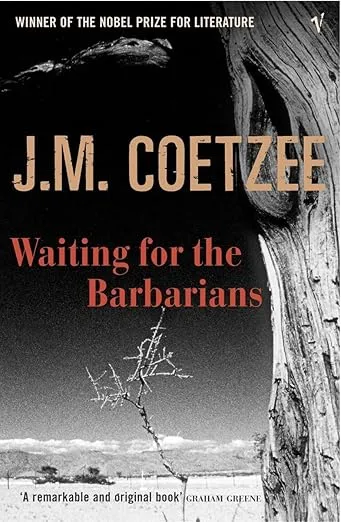
Coetzee is waiting for meaning …

I didn’t read J. M. Coetzee’s fiction until about five years ago. I had read his half of an exchange of letters with Paul Auster, a Christmas present from my son, who knew about my interest Auster’s writing. My son thought I might be interested in what Auster wrote when he wasn’t consciously concocting something a step or two outside normal human existence, but close enough that it felt, well, right.

The fiction of Coetzee – who won the Nobel Prize for Literature in 2003 – came into my purview in 2019. The accidental combinati on of a chat with a scholar of English literature and mentions in newspaper articles about his fiction alerted me to Coetzee’s link to philosophical inquiry. I then read three of his books – The Life and Times of Michael K. (1983), Diary of a Bad Year (2007), and Elisabeth Costello (2001). Now this:

Waiting for the Barbarians (1980) is even more unsettling than the others …

Read the rest of Coetzee is waiting for meaning … on Substack.

‘Atomic’ – the ironic likability of a jihadi and a drug smuggler

One evening, and for no particular reason – an absence of anything fresh-sounding in the streaming services, perhaps? – we dipped into an unlikely looking thriller series: “Atomic,” produced for Sky Studios. At least it was something we hadn’t dipped into before and rejected. It promised a story of drug smuggler in North Africa who meets a jihadi.

Soon I found myself asking a question: What turns the unlikely, implausible and frankly repugnant into something that’s, well, fun – sort of? How do the writers, or the director, or the actors pull this off? …

Read the rest of ‘Atomic’ – the ironic likability of a jihadi and a drug smuggler on Substack.

What makes a plotless novel work? (Orbital, coming around again)

A few weeks back, Samantha Harvey came to talk in the splendid church of Sherborne Abbey about her splendid, little, and 2024 Booker Prize-winning novel Orbital.

I discussed the book in these pages shortly before it won the prize, how it winds its plotless story around us readers much as its inaction winds the international space station sixteen times around the Earth during twenty-four hours of flight.

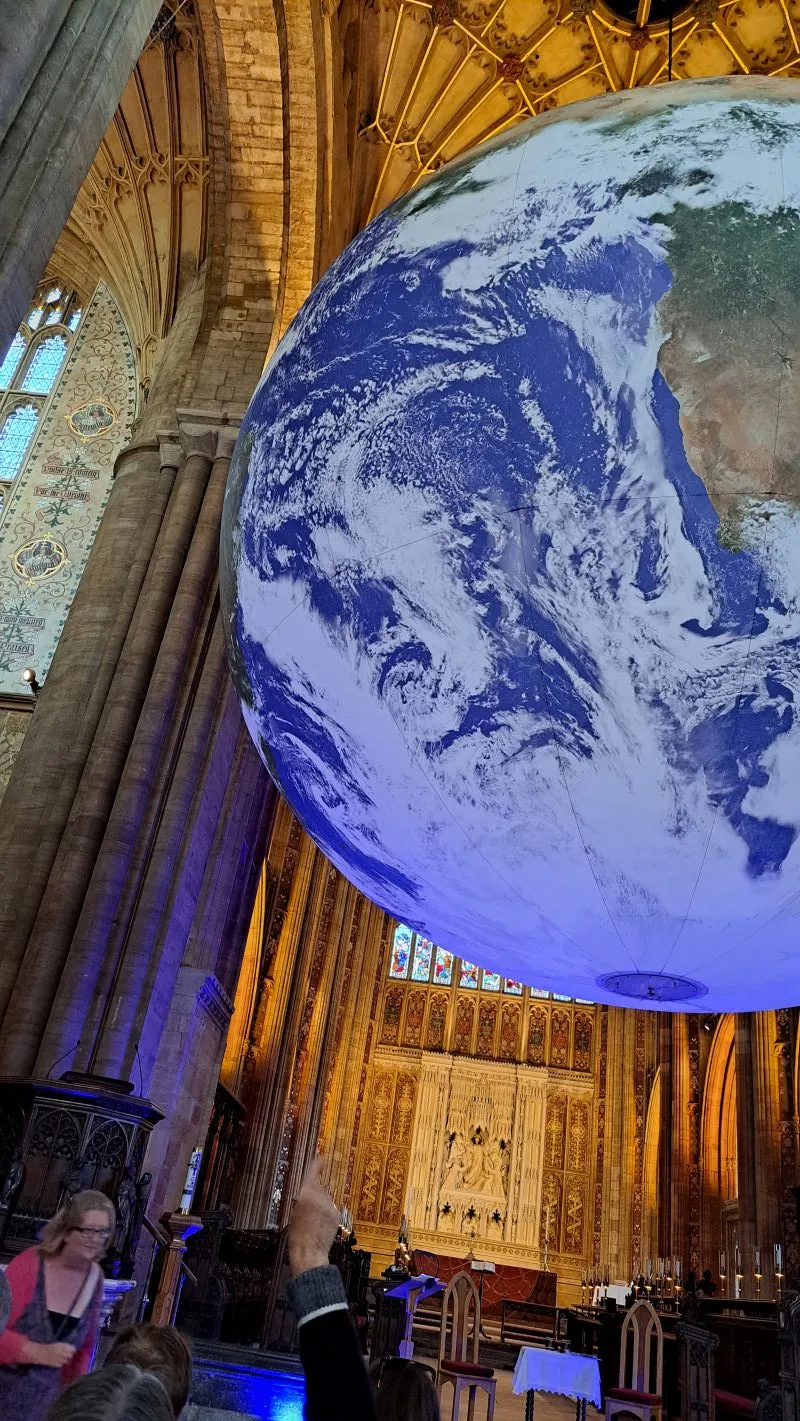
Harvey’s visit to Sherborne came as the Abbey was hosting an exhibition of “Gaia,” including a giant globe suspended and rotating from the vaulting heights of the church, a setting that added perspective to the novel’s content, in which the space station itself feels like a metaphor for Earth itself.

I won’t repeat the substance of the book or my review, but I was intrigued by the answer Harvey gave to question from a member of the 300-odd people who filled the nave of the church. …

Read the rest of What makes a plotless novel work? (Orbital, coming around again) on Substack.

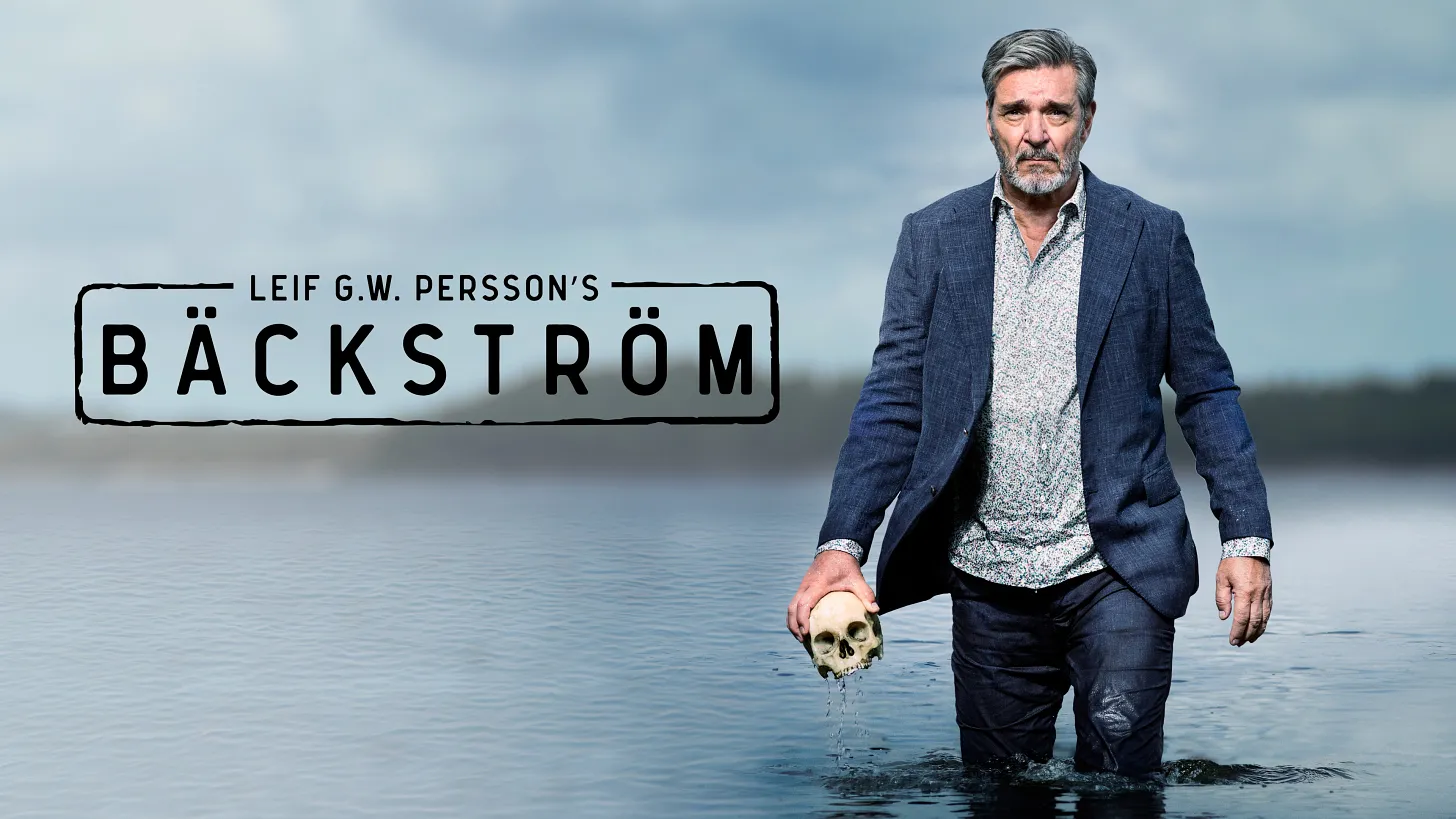
The backflips of ‘Bäckström’

Evert Bäckström is the cleverest cop in the Stockholm police force, having cleared up 99 percent of the murder cases he’s ever investigated during his long career. That record has won the grizzled, bedraggled detective a regular slot as a commentator on a popular television crime-chat show, where he runs circles around his opposite number, a defense attorney who’s now almost as famous as Bäckström himself. It makes Bäckström untouchable, even by his skeptical bosses. The supporting evidence:

  • He’s seen having a glass of whiskey at 10 a.m., without a hint of embarrassment.
  • He’s been caught on a security camera stealing paintings from a crime scene soon after the forensics team vacated the premises and removed the dead body.
  • He casually steals a bottle of an especially good whiskey from another crime scene, where fellow policemen have found him holding a gun while standing over a dead body, a person with whom he’s had a long-running rivalry.
  • Unobserved – except by us, the audience – he confiscates cash from a crime and stashes it in a secret compartment in his bookcase.
  • Everyone knows these things and can’t seem to make anything stick.

Welcome to world of the lovable, hate-able Bäckström, which first aired on Swedish television in 2020. It’s based on the novels of Leif G. W. Persson. …

Read the rest of The backflips of ‘Bäckström’ – Don Nordberg (is/on) writing on Substack.