Category choice in creative writing

By Donald Nordberg, manuscript accepted for publication in 2021 at New Writing (Routledge, https://doi.org/10.1080/14790726.2020.1855200)

Abstract: Would-be writers of fiction face choices as soon as they start thinking about how to get published: What sort of a work is this? Where will the book sit on the shelf? What does the publisher tell the reader about what to expect? And then, where does it sit in company of other works, and where do you sit in the company of other writers? This paper examines three such questions of category choice: plot versus character, genre versus literary, psychology versus philosophy. It asks how do writers – and audiences – make sense of a work of fiction, and with what implications for the process of writing? It suggests how writers might use the differences between them to enhance the experience of reading beyond the expectations set by the categories to which the works have been placed.

Read more at

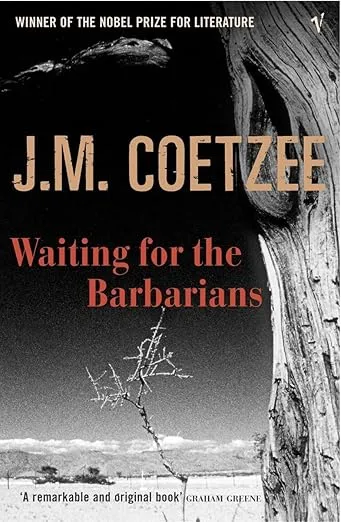
Coetzee is waiting for meaning …

I didn’t read J. M. Coetzee’s fiction until about five years ago. I had read his half of an exchange of letters with Paul Auster, a Christmas present from my son, who knew about my interest Auster’s writing. My son thought I might be interested in what Auster wrote when he wasn’t consciously concocting something a step or two outside normal human existence, but close enough that it felt, well, right.

The fiction of Coetzee – who won the Nobel Prize for Literature in 2003 – came into my purview in 2019. The accidental combinati on of a chat with a scholar of English literature and mentions in newspaper articles about his fiction alerted me to Coetzee’s link to philosophical inquiry. I then read three of his books – The Life and Times of Michael K. (1983), Diary of a Bad Year (2007), and Elisabeth Costello (2001). Now this:

Waiting for the Barbarians (1980) is even more unsettling than the others …

Read the rest of Coetzee is waiting for meaning … on Substack.

‘Atomic’ – the ironic likability of a jihadi and a drug smuggler

One evening, and for no particular reason – an absence of anything fresh-sounding in the streaming services, perhaps? – we dipped into an unlikely looking thriller series: “Atomic,” produced for Sky Studios. At least it was something we hadn’t dipped into before and rejected. It promised a story of drug smuggler in North Africa who meets a jihadi.

Soon I found myself asking a question: What turns the unlikely, implausible and frankly repugnant into something that’s, well, fun – sort of? How do the writers, or the director, or the actors pull this off? …

Read the rest of ‘Atomic’ – the ironic likability of a jihadi and a drug smuggler on Substack.

What makes a plotless novel work? (Orbital, coming around again)

A few weeks back, Samantha Harvey came to talk in the splendid church of Sherborne Abbey about her splendid, little, and 2024 Booker Prize-winning novel Orbital.

I discussed the book in these pages shortly before it won the prize, how it winds its plotless story around us readers much as its inaction winds the international space station sixteen times around the Earth during twenty-four hours of flight.

Harvey’s visit to Sherborne came as the Abbey was hosting an exhibition of “Gaia,” including a giant globe suspended and rotating from the vaulting heights of the church, a setting that added perspective to the novel’s content, in which the space station itself feels like a metaphor for Earth itself.

I won’t repeat the substance of the book or my review, but I was intrigued by the answer Harvey gave to question from a member of the 300-odd people who filled the nave of the church. …

Read the rest of What makes a plotless novel work? (Orbital, coming around again) on Substack.

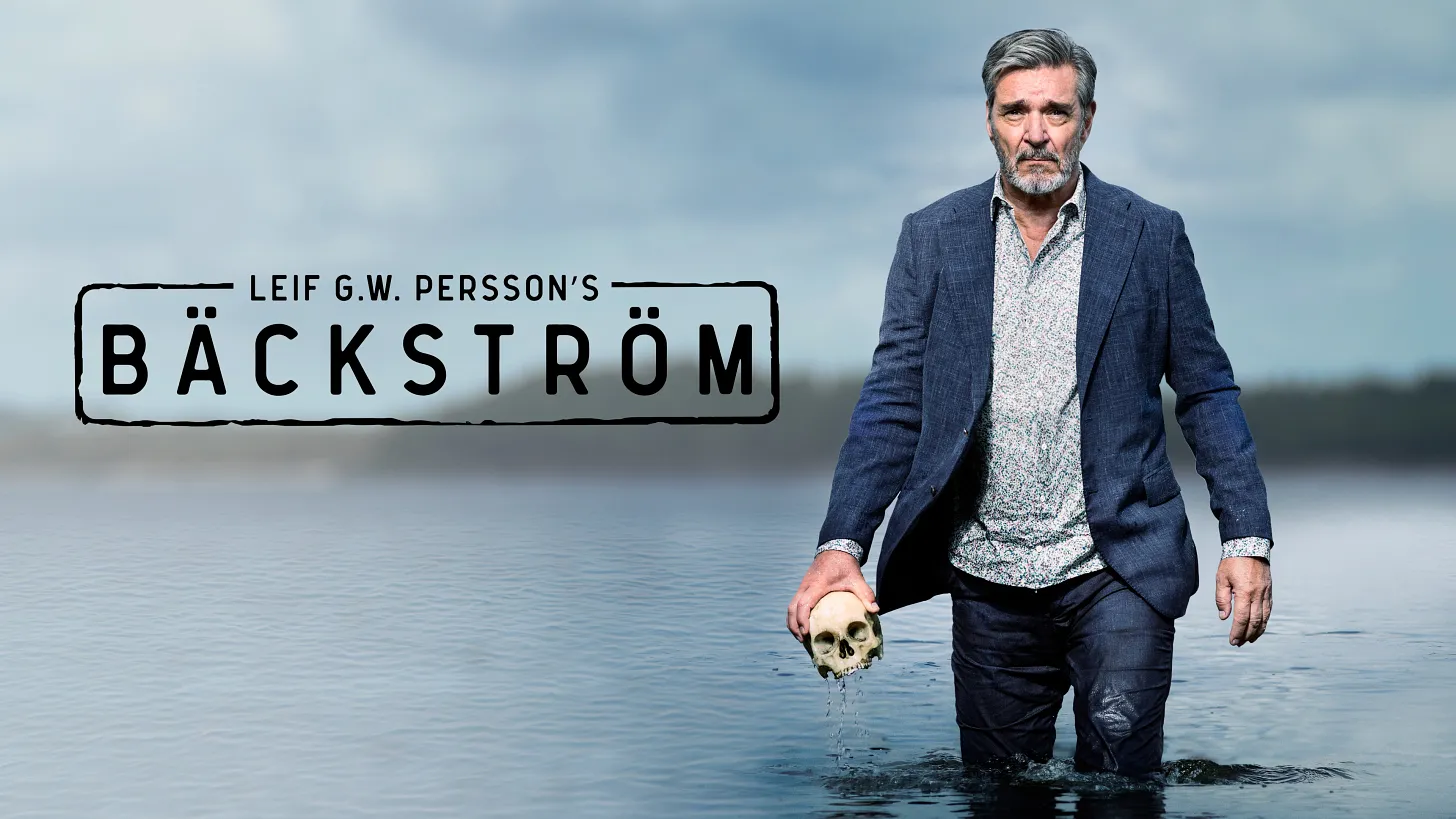
The backflips of ‘Bäckström’

Evert Bäckström is the cleverest cop in the Stockholm police force, having cleared up 99 percent of the murder cases he’s ever investigated during his long career. That record has won the grizzled, bedraggled detective a regular slot as a commentator on a popular television crime-chat show, where he runs circles around his opposite number, a defense attorney who’s now almost as famous as Bäckström himself. It makes Bäckström untouchable, even by his skeptical bosses. The supporting evidence:

  • He’s seen having a glass of whiskey at 10 a.m., without a hint of embarrassment.
  • He’s been caught on a security camera stealing paintings from a crime scene soon after the forensics team vacated the premises and removed the dead body.
  • He casually steals a bottle of an especially good whiskey from another crime scene, where fellow policemen have found him holding a gun while standing over a dead body, a person with whom he’s had a long-running rivalry.
  • Unobserved – except by us, the audience – he confiscates cash from a crime and stashes it in a secret compartment in his bookcase.
  • Everyone knows these things and can’t seem to make anything stick.

Welcome to world of the lovable, hate-able Bäckström, which first aired on Swedish television in 2020. It’s based on the novels of Leif G. W. Persson. …

Read the rest of The backflips of ‘Bäckström’ – Don Nordberg (is/on) writing on Substack.

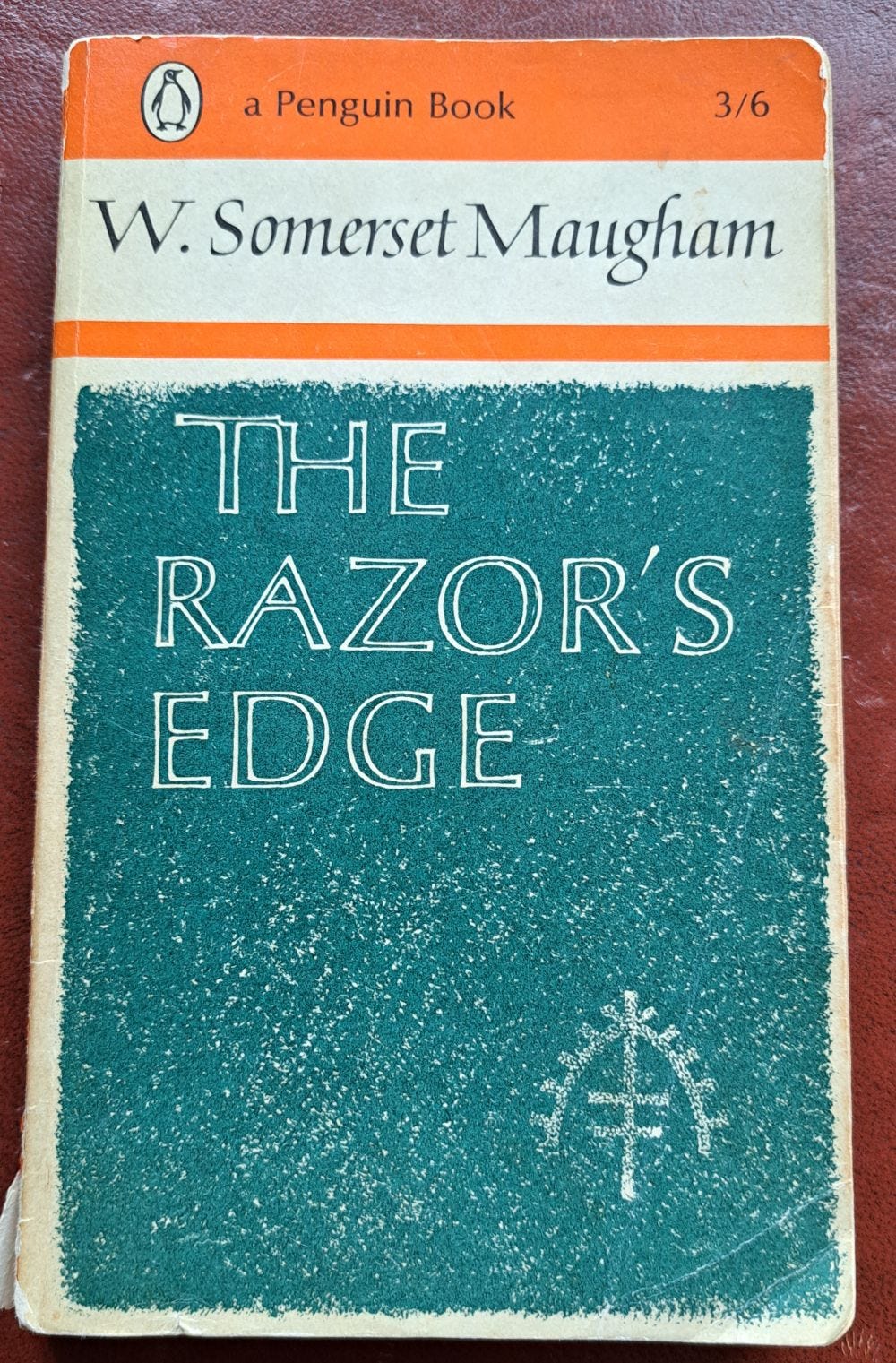
Novelist as observer: Somerset Maugham and The Razor’s Edge

What is the point of fiction?

  • Some storytelling has a simple declared intention: to entertain. That’s it.
  • Others are educative. They are often didactic, with a moral, like a lesson in a children’s book separating good from evil with a smile, or stories warning about a warming climate told by building readers’ empathy with characters confronting capitalism, rather than presenting scientific evidence. They are ones that enact a fixed set of ideas through narrative. They educate by entertaining. They run the risk of letting ideas tip into ideologies.
  • Others explore ideas that aren’t yet fixed, at least not in the mind of the fiction writer, but with the aim of finding some truth (Nordberg, 2023, 2024).

Every so often – and they come less often than I as reader would like – some pursue ideas without an ulterior motive, an end for which fiction is the means. These observe and inform.

I’ve just read one of these, one that builds a sense of satisfaction, of openness and tolerance, despite the insignificance of its plot, its modest claims of analysis, and its absence of moralizing. The work: The Razor’s Edge, a somewhat quaint and rather quiet 1944 novel by William Somerset Maugham.

It came to my attention a couple of years ago, when a professional editor mentioned its unusual and striking method of narration. Look it up, she said. I finally have. …

Read the rest of Novelist as observer: Somerset Maugham and The Razor’s Edge on Substack.

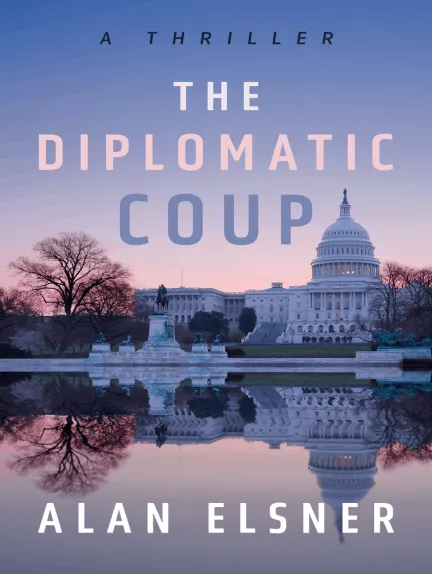
Incredibly authentic fiction: Elsner’s The Diplomatic Coup

What if you’re telling a story, a piece of fiction, a product of the imagination, and if it’s a thriller, some looming catastrophe about to be averted by use of means implausibly distant? How do you make it seem authentic?

One part of it is context: It’s August 2025, two months short of the second anniversary of the day Hamas fighters crossed into Israel and killed a couple of thousand civilians, most of whom were simply enjoying a break in the warm autumn weather. Israel retaliated by attacking Gaza, and we have all heard the running updates on the destruction and deaths that followed almost every day since. Arab-Israeli relations have been somewhere between hostile and horrible since 1948, but this is the worst.

The next, personal part is this: I’m looking for a novel to read and I remember that I had bought one three or four years ago but not opened it. It was written by a former colleague, a journalist whose newswriting and analyses I have long respected, especially about the Middle East. He self-published it, which is not the warning signal it once was, and I trust him. Now that the real-world context is right, I’ll read that. …

Read the rest of Incredibly authentic fiction: Elsner’s The Diplomatic Coup on Substack.

What’s so funny about killing people? ‘The Assassin’ (PS: ‘Heads of State’)

A shot rings out across the square of a village on a small Greek island, where a wedding party has just emerged into the sunshine. One person dies, then another; within seconds five people are dead. Pause (for reloading). Then another five as everyone ducks for cover. One person gets out of the square, drives into the hills where the sniper is shooting, lures him out of hiding, and kills him, smashing his head in with a large stone.

Then, three men, dressed in black and driving an oversized, black SUV, appear in the square. One says they are from Interpol, looking for the person who just has escaped. When challenged about his ID, the man shoots the questioner, and the other two men use their machine guns to mow down everyone else in the square, bar one man – ironically, the village butcher – who manages to stay hidden.

Cue laughter. But why do we laugh?

Read the rest of What’s so funny about killing people? ‘The Assassin’ (PS: ‘Heads of State’) on Susbstack.

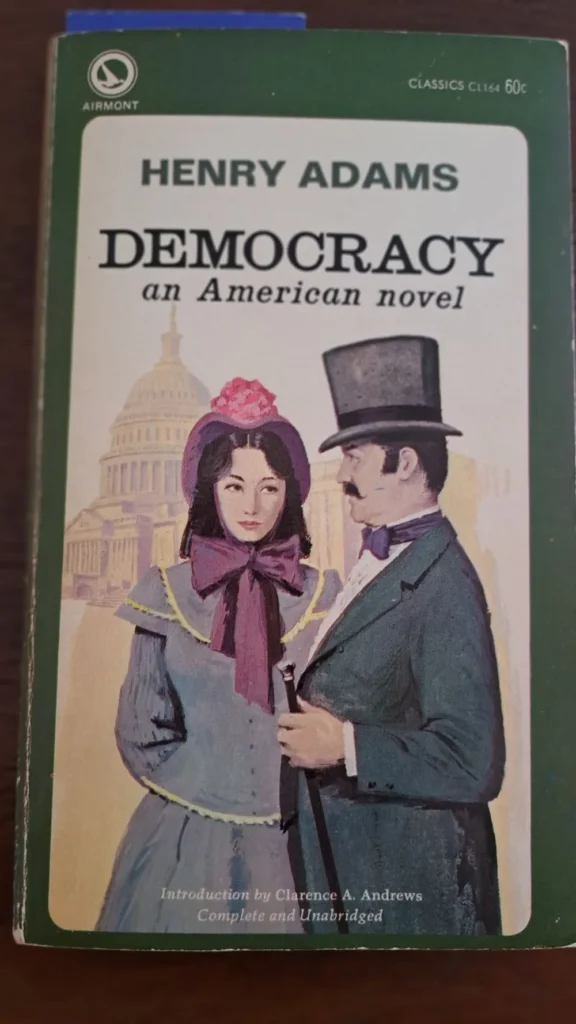
Henry Adams looks for Democracy

Around the globe, the news every day is full of talk about the rise of autocracy, the challenge – even threat – it poses to democratic institutions, and the questions it poses for political order, justice and liberty. Where better to look for answers than in a work of fiction, contrived a century and a half ago?

Under the shadow of political turmoil of the 1870s, Henry Brooks Adams went on a quest to locate democracy, taking his protagonist, the 30-year-old and recently widowed Mrs. Lightfoot Lee out of her comfortable if sad life in New York to spend the winter in Washington. She occupies a house where the people she meets gather to engage in polite combat over the spoils of electoral victory. It’s just across Lafayette Square from the White House. …

Read the rest of Henry Adams looks for Democracy on Substack.

Stourbend | writing, editing, paths to publication

We’re a small team of writers intent on facilitating the path to publishing – writing, editing, and advice on the route to publication.

We run workshops on writing and editing and speak to groups of writers, in person in England and online anywhere.

We conduct edits – structural and manuscript assessments.

We work across genres of fiction as well as non-fiction. If you want help with scriptwriting, we can recommend someone else.

If we think a manuscript is strong enough to publish – and if traditional routes to publishing are blocked – we may agree to help you get your work in print.

More later …