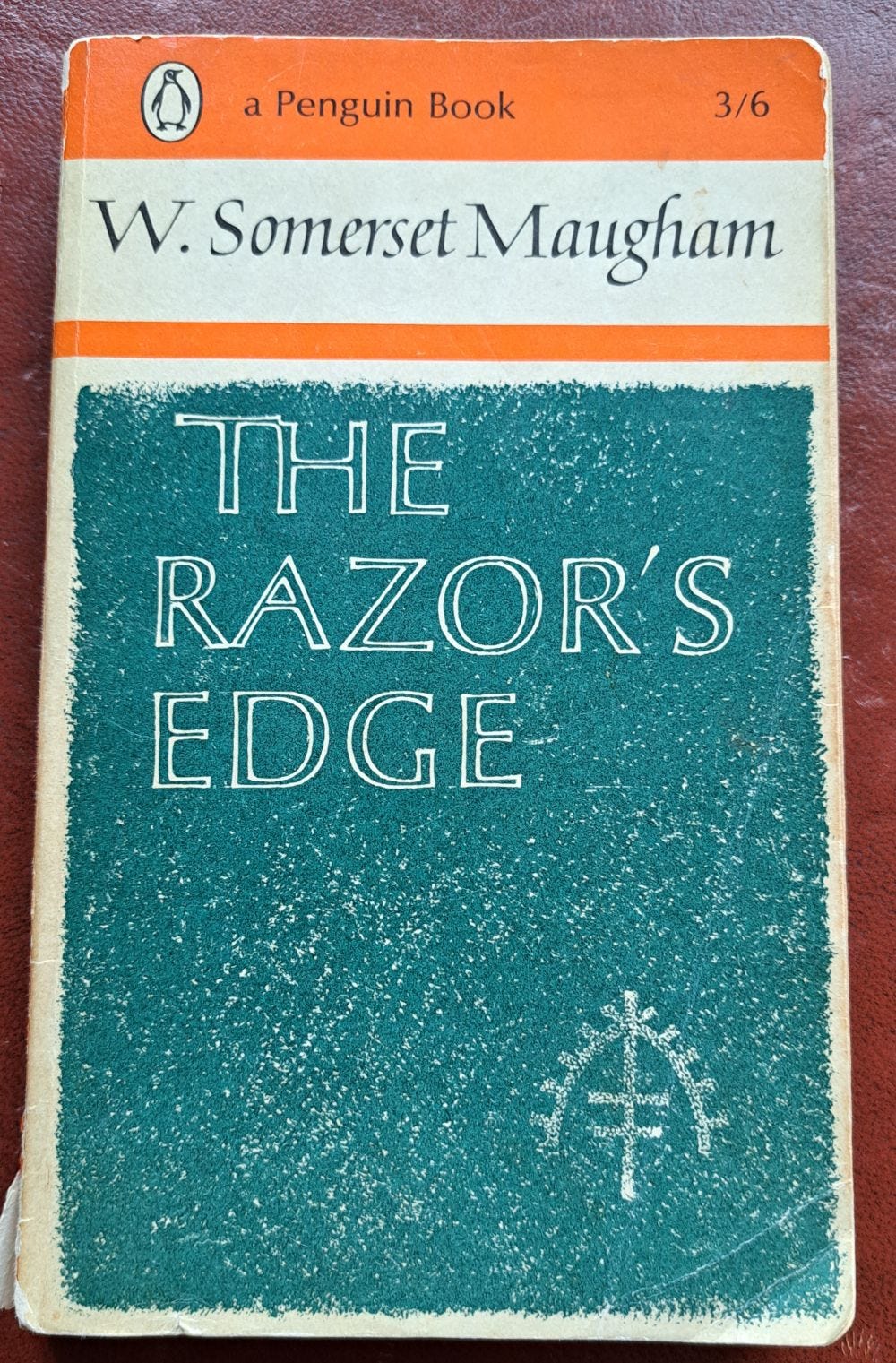
Novelist as observer: Somerset Maugham and The Razor’s Edge

What is the point of fiction?

  • Some storytelling has a simple declared intention: to entertain. That’s it.
  • Others are educative. They are often didactic, with a moral, like a lesson in a children’s book separating good from evil with a smile, or stories warning about a warming climate told by building readers’ empathy with characters confronting capitalism, rather than presenting scientific evidence. They are ones that enact a fixed set of ideas through narrative. They educate by entertaining. They run the risk of letting ideas tip into ideologies.
  • Others explore ideas that aren’t yet fixed, at least not in the mind of the fiction writer, but with the aim of finding some truth (Nordberg, 2023, 2024).

Every so often – and they come less often than I as reader would like – some pursue ideas without an ulterior motive, an end for which fiction is the means. These observe and inform.

I’ve just read one of these, one that builds a sense of satisfaction, of openness and tolerance, despite the insignificance of its plot, its modest claims of analysis, and its absence of moralizing. The work: The Razor’s Edge, a somewhat quaint and rather quiet 1944 novel by William Somerset Maugham.

It came to my attention a couple of years ago, when a professional editor mentioned its unusual and striking method of narration. Look it up, she said. I finally have. …

Read the rest of Novelist as observer: Somerset Maugham and The Razor’s Edge on Substack.

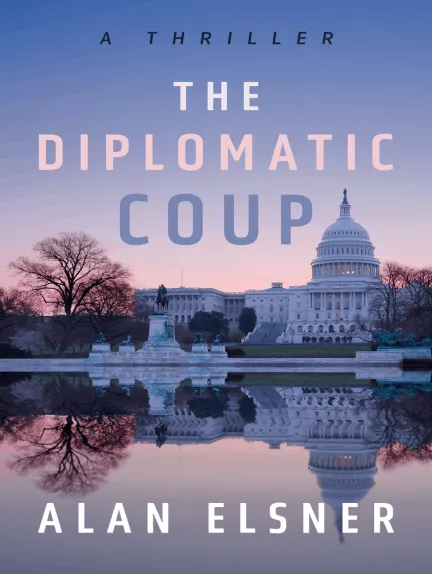
Incredibly authentic fiction: Elsner’s The Diplomatic Coup

What if you’re telling a story, a piece of fiction, a product of the imagination, and if it’s a thriller, some looming catastrophe about to be averted by use of means implausibly distant? How do you make it seem authentic?

One part of it is context: It’s August 2025, two months short of the second anniversary of the day Hamas fighters crossed into Israel and killed a couple of thousand civilians, most of whom were simply enjoying a break in the warm autumn weather. Israel retaliated by attacking Gaza, and we have all heard the running updates on the destruction and deaths that followed almost every day since. Arab-Israeli relations have been somewhere between hostile and horrible since 1948, but this is the worst.

The next, personal part is this: I’m looking for a novel to read and I remember that I had bought one three or four years ago but not opened it. It was written by a former colleague, a journalist whose newswriting and analyses I have long respected, especially about the Middle East. He self-published it, which is not the warning signal it once was, and I trust him. Now that the real-world context is right, I’ll read that. …

Read the rest of Incredibly authentic fiction: Elsner’s The Diplomatic Coup on Substack.

What’s so funny about killing people? ‘The Assassin’ (PS: ‘Heads of State’)

A shot rings out across the square of a village on a small Greek island, where a wedding party has just emerged into the sunshine. One person dies, then another; within seconds five people are dead. Pause (for reloading). Then another five as everyone ducks for cover. One person gets out of the square, drives into the hills where the sniper is shooting, lures him out of hiding, and kills him, smashing his head in with a large stone.

Then, three men, dressed in black and driving an oversized, black SUV, appear in the square. One says they are from Interpol, looking for the person who just has escaped. When challenged about his ID, the man shoots the questioner, and the other two men use their machine guns to mow down everyone else in the square, bar one man – ironically, the village butcher – who manages to stay hidden.

Cue laughter. But why do we laugh?

Read the rest of What’s so funny about killing people? ‘The Assassin’ (PS: ‘Heads of State’) on Susbstack.

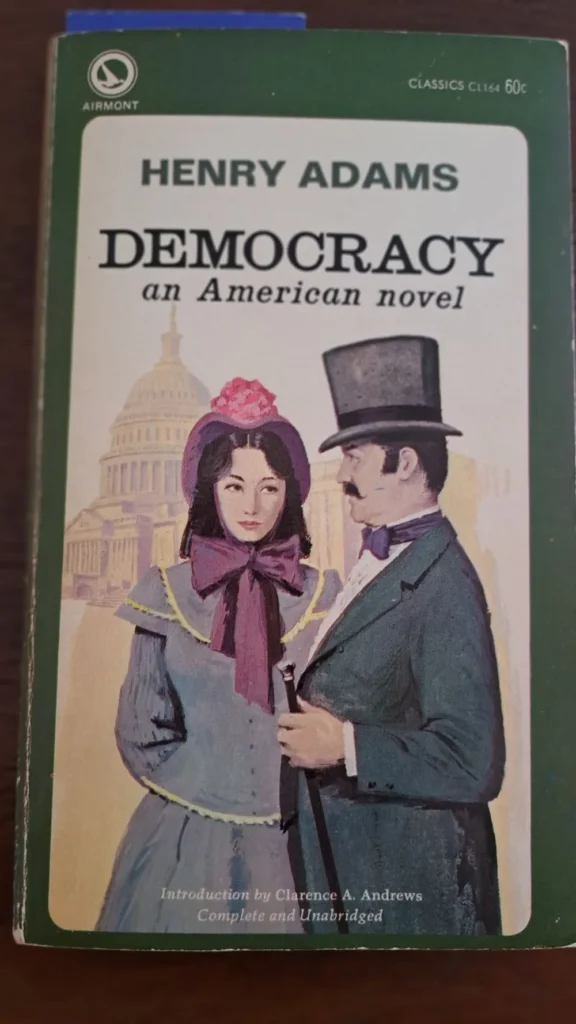
Henry Adams looks for Democracy

Around the globe, the news every day is full of talk about the rise of autocracy, the challenge – even threat – it poses to democratic institutions, and the questions it poses for political order, justice and liberty. Where better to look for answers than in a work of fiction, contrived a century and a half ago?

Under the shadow of political turmoil of the 1870s, Henry Brooks Adams went on a quest to locate democracy, taking his protagonist, the 30-year-old and recently widowed Mrs. Lightfoot Lee out of her comfortable if sad life in New York to spend the winter in Washington. She occupies a house where the people she meets gather to engage in polite combat over the spoils of electoral victory. It’s just across Lafayette Square from the White House. …

Read the rest of Henry Adams looks for Democracy on Substack.